
BIM Structural Coordination in Florida
Structural Models Built to Coordinate, Not Just to Document
S-600.1
What BIM Structural Coordination Actually Means on a Project
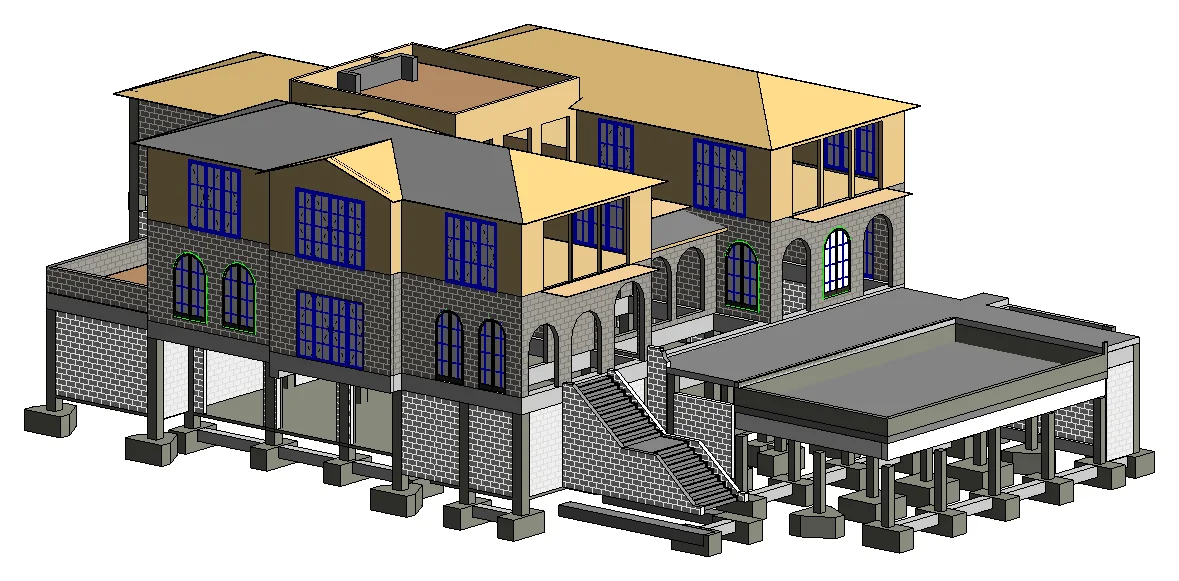
BIM structural coordination is the process of building the structural model in a shared 3D environment alongside the architectural and MEP models - and actively resolving the conflicts between them before drawings are issued for permit or construction.
The conflicts that coordination is designed to catch are specific and predictable. A structural beam at the elevation the engineer specified occupies the same space as the HVAC ductwork the mechanical engineer routed through the same bay. A column lands in a location the architect's reflected ceiling plan didn't account for. A concrete shear wall runs through a space the MEP engineer planned to use for a major equipment chase. A floor penetration for plumbing runs through a post-tensioned slab zone where cutting is not permitted.
Every one of these conflicts has a resolution - but the cost and disruption of that resolution depends entirely on when it is found. Found during BIM coordination before documents are issued: a design revision, a model update, a revised sheet. Found in the field during construction: a contractor RFI, an engineer response, a change order, a schedule impact, and in some cases, remediation of work that was already built.
BIM structural coordination moves the discovery of those conflicts from the job site to the design phase. That is what it is for. Everything else - the visual quality of the model, the sophistication of the software, the resolution of the elements - serves that purpose.
S-600.2
What Duran's BIM Structural Coordination Includes
Revit structural model development. We build the structural model in Autodesk Revit - not as a 3D representation of 2D drawings, but as a fully parametric structural model from which coordinated drawings, schedules, and details are produced. The model reflects the actual structural geometry: beams at the correct elevations, columns at the correct locations, slabs and decks at the correct thicknesses, foundations at the correct depths. When the model changes, the drawings change - eliminating the version control gaps that occur when drawings are maintained independently of the model.
- Structural-architectural coordination
- We receive the architect's Revit model and coordinate the structural model against it - aligning column grids with the architectural layout, resolving structural member locations against ceiling heights and floor elevations, and identifying structural elements that conflict with architectural program. Coordination happens during design development, when the cost of a design adjustment is a model revision rather than a change order.
- Structural-MEP coordination and clash detection
- Structural-MEP coordination is where the most consequential field conflicts originate, and where BIM coordination delivers the clearest value. We run clash detection between the structural model and the mechanical, electrical, and plumbing models - identifying hard clashes (physical overlaps), soft clashes (clearance violations), and workflow conflicts - and work with the MEP engineer to resolve them before documents are issued. Beam penetrations for MEP routing, sleeve locations in concrete members, and equipment clearance conflicts are resolved in the model, not in the field.
Coordination
Clashes are cheaper to find in the model.
S-600.4
- Coordinated structural drawings from the model
- Structural plans, elevations, sections, and details are produced directly from the Revit model - ensuring that what is drawn reflects what is modeled, and that coordination changes are reflected consistently across the full set of documents. Sheet-by-sheet manual updates that don't propagate through the full drawing set are eliminated when drawings are model-derived.
- Federated model participation
- On projects where the full project team is working in a federated BIM environment - using Autodesk Construction Cloud, BIM 360, or a project-specific common data environment - we participate in the federated model workflow: sharing the structural model in the project environment, participating in coordination meetings, tracking and resolving clash issues through the project's BIM execution plan, and delivering model updates on the project's coordination schedule.
- Construction-phase model support
- When conditions change during construction - field-verified dimensions that differ from design drawings, design modifications that result from contractor RFIs, added scope - we update the structural model to reflect the change and issue coordinated revised documents. The structural model remains current through construction, rather than diverging from actual conditions as changes accumulate.
S-600.5
Why a Dedicated BIM Director Changes the Structural Coordination Equation
Most structural engineering firms of Duran's size handle BIM as a drafting function - CAD technicians or junior staff who translate the engineer's design into Revit models. The BIM expertise and the structural engineering expertise sit in different people, and the model reflects the engineering rather than being developed alongside it.
Duran's dedicated BIM Director changes that relationship. The BIM Director is involved in structural projects from the start - not as the person who drafts the engineer's sketches, but as the person who ensures the structural model is built to coordinate from the beginning: at the right level of development, in the right shared coordinate system, with the structural geometry developed in three dimensions rather than as a projection of 2D thinking into a 3D environment.
The practical result is a structural model that is genuinely useful for coordination - not a Revit file that looks like the drawings but doesn't carry the geometric accuracy needed to detect real conflicts. Architects and MEP engineers who have coordinated with Duran's structural models on previous projects come back to Duran in part because the model they receive is worth coordinating against.
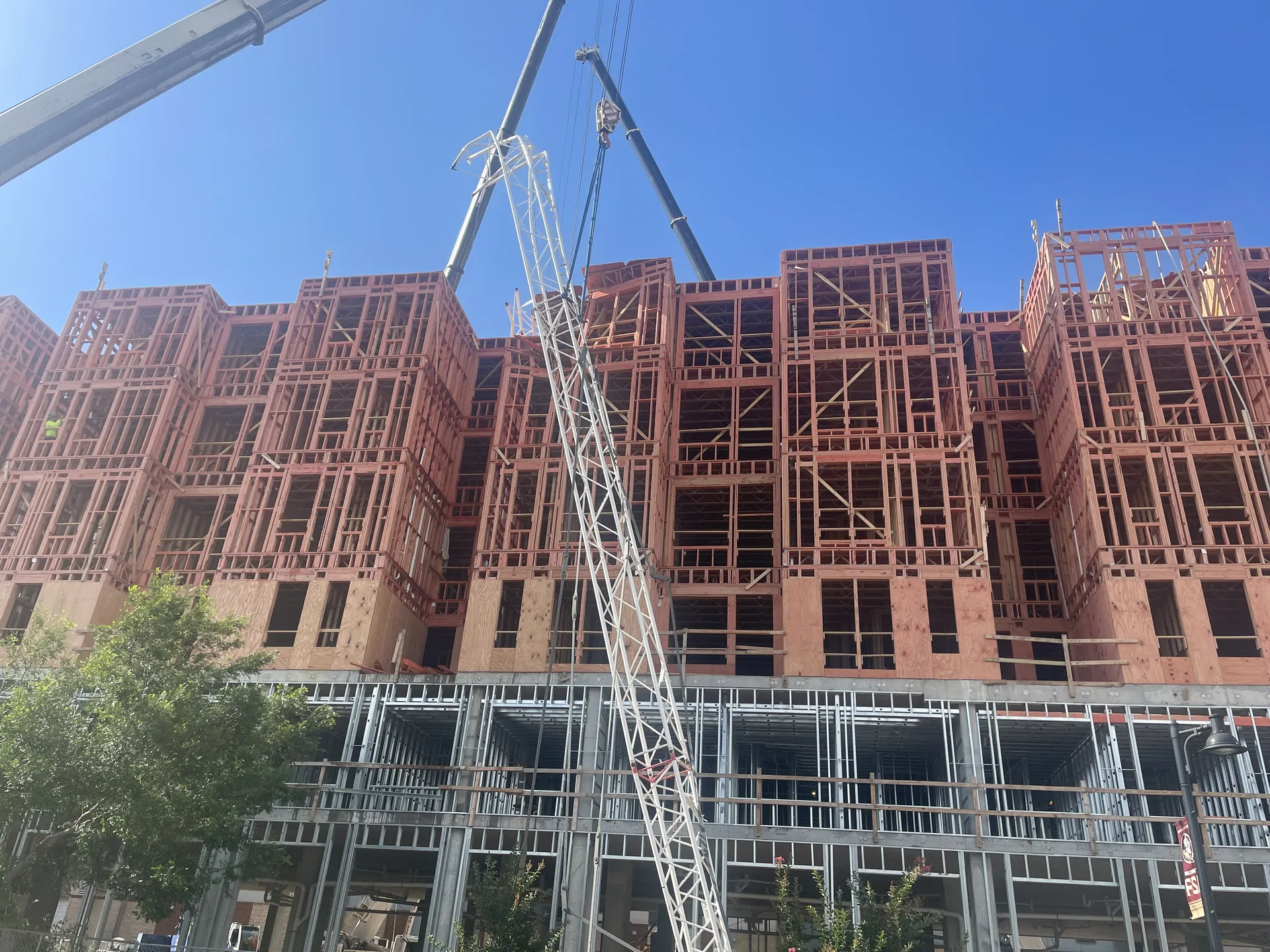
Before the trades
Modeled, coordinated, then built.
S-600.7
Who Benefits Most From BIM Structural Coordination
Architects working in Revit who need a structural partner who can coordinate with their model. Not all structural engineers build Revit models that architects can actually use for coordination. A structural Revit file that is at a low level of development, built on a different coordinate system, or missing the structural geometry the architect needs to work around is more liability than asset. Architects who have been through that experience come to Duran knowing the structural model will be built to coordinate.
General contractors managing the pre-construction coordination process. GCs who require a coordinated BIM model as a condition of construction document acceptance need a structural engineer who participates in the coordination process - not one who delivers a Revit file and considers BIM complete. We participate in GC-led coordination meetings, respond to clash reports, and update the structural model as coordination progresses.
Developers and owners who have absorbed change order costs from coordination failures. The case for BIM structural coordination is most clearly made to owners who have been through a project where coordination failures generated significant change order costs. The incremental cost of coordination - done correctly, during design - is reliably less than the change order cost of finding the same conflicts during construction.
Healthcare, commercial, and institutional projects where MEP complexity is highest. The structural-MEP coordination value is greatest on projects with dense, complex MEP systems - hospitals, medical office buildings, laboratory facilities, data centers, and similar occupancies where mechanical and electrical systems compete for structural interstitial space across the full building. These are the project types where coordination failures are most expensive and most disruptive.
S-600.10
Common BIM Coordination Failures We Prevent
The structural-MEP and structural-architectural conflicts that surface as field problems on uncoordinated projects follow recognizable patterns. These are the findings that drive the value of structural BIM coordination.
- Beam-to-duct conflicts in mechanical plenum space. The single most common structural-MEP conflict. Structural beams at the elevation required by the structural design intersect with primary HVAC ductwork at the elevation the mechanical engineer routed it. Neither engineer saw the other's drawings in three dimensions before issuing. The conflict surfaces when the framing is in place and the mechanical contractor attempts to install ductwork. Resolution: field modification of the structural beam (typically a web penetration or a beam relocation), a change order, and a schedule delay. Prevention: structural-MEP clash detection during design.
- Column locations that conflict with architectural program. A structural column lands in the middle of a corridor, inside a plumbing fixture, or at a location the architecture assumes is open. In a 2D design process, column locations shown on the structural plan are often not cross-referenced against the architectural reflected ceiling plan, equipment layouts, or interior elevations until the drawings are assembled for permit. In a BIM coordination process, the structural and architectural models are overlaid and the conflict is visible in three dimensions during design development.
- Slab penetrations in post-tensioned zones. Post-tensioned concrete slabs are common in Florida's commercial and multifamily construction. MEP penetrations through post-tensioned slabs require careful positioning to avoid cutting tendons - a structural failure mode with serious consequences and significant repair cost. Structural BIM coordination identifies MEP penetration locations that conflict with post-tensioning layouts before slabs are cast, allowing penetrations to be repositioned during design rather than cored through a cast slab with active tendons.
- Structural-architectural elevation mismatches. Structural slab elevations, beam bottom elevations, and floor-to-floor heights as modeled by the structural engineer sometimes differ from the architectural drawings by amounts that don't show up in 2D coordination but become apparent in 3D. Ceiling heights that the architect assumes are achievable are in fact not - the structural depth plus MEP below the structure leaves insufficient space for the finished ceiling. BIM coordination makes this visible during design, when the architectural program can be adjusted rather than after the structure is framed.
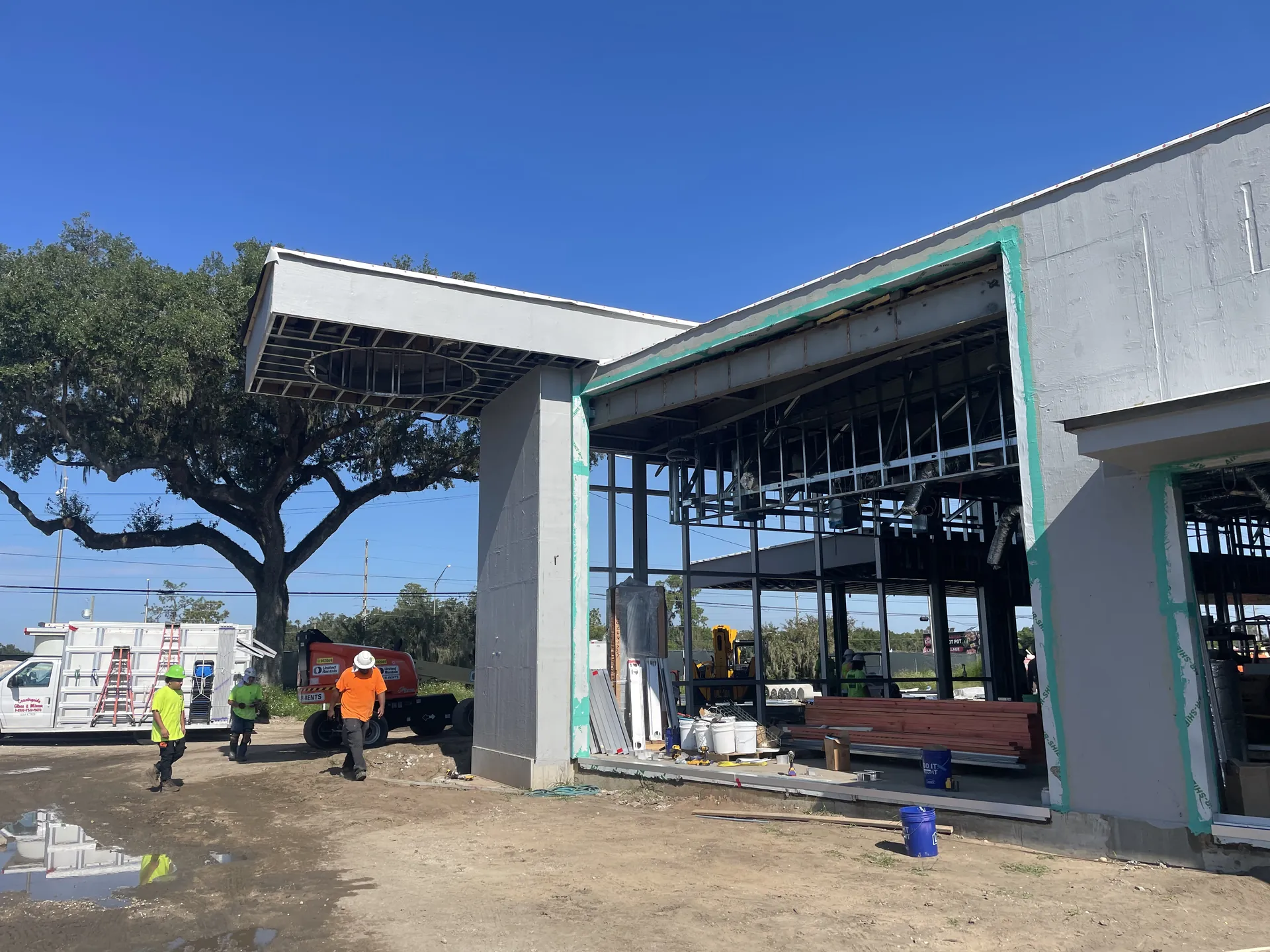
The model
One model, every trade, before the build.
Questions and answers.
S-600.10 / FAQ-
We work primarily in Autodesk Revit for structural model development, with Navisworks for clash detection and coordination review. We participate in BIM 360 and Autodesk Construction Cloud project environments and can work within the BIM execution plan and common data environment the project team establishes.
-
LOD varies by project phase and scope - we align to the project BIM execution plan, or establish LOD expectations at the start of the engagement. For design coordination purposes, structural models are typically delivered at LOD 300-350, with sufficient geometric accuracy for meaningful clash detection. Construction-phase models can be developed to higher LOD as required.
-
Yes. BIM coordination is not a deliverable we hand off - it is a process we participate in. We attend coordination meetings, respond to clash reports, update the structural model as coordination progresses, and track the resolution of structural-related clashes through the project's issue management process.
-
Coordination is most effective when all disciplines are working in compatible BIM environments. When MEP models are not available in a coordinated format, we work with what is available - 2D drawings, IFC exports, or PDF overlays - to identify conflicts through whatever means the project's documentation allows. Full BIM coordination requires BIM participation from the full design team.
-
BIM structural coordination is most impactful on projects with complex MEP systems and tight interstitial space - commercial, healthcare, institutional, and multifamily projects where coordination failures are most costly. On smaller residential or simple commercial projects, the coordination value may not justify the overhead of a full BIM coordination process. We scope BIM services to match project complexity, and we're direct about when a full coordination process adds value versus when simpler coordination methods are adequate.
Start with a conversation.
S-600.11 / next stepSpeak with a licensed PE
Tell us the project type, size and timeline and you get an engineering answer, not a sales call.
Call (813) 536-8002Send us your plans
Share plans, sketches or photos and we review them before we call. Scope, size and timeline are what let us give you a real number.
Request a consultationTell us about the project.
S-600.12 / consult requestThe more you can tell us about scope, size and timeline, the more useful our first call is. A licensed PE reads every one of these.