
Historic Preservation Structural Engineering in Florida
Protecting What Makes a Building Worth Saving, While Making It Safe Enough to Use
S-500.1
Why Historic Buildings Require a Different Structural Engineering Approach
Historic buildings were built with materials, systems, and construction logic that predate modern structural engineering codes. Evaluating and working with those systems requires more than applying current code standards - it requires understanding how these structures actually behave.
- Unreinforced masonry
- Ybor City's brick commercial buildings, the masonry cottages of West Tampa, and Tampa Heights' historic institutional structures were built with unreinforced brick or CMU laid in lime mortar. These walls carry gravity loads and resist lateral wind forces through mass and geometry - not through the reinforced systems Florida's current wind design standards assume. Strengthening them for modern wind performance requires engineering analysis specific to unreinforced masonry behavior, not just application of current prescriptive code requirements.
- Old-growth timber framing
- Historic wood-frame residential buildings in Hyde Park, Seminole Heights, and throughout Florida's pre-war housing stock were built with dense old-growth longleaf pine - a material significantly stronger and more durable than modern dimensional lumber, but also one that requires specific engineering judgment to assess and work with. Connections between members, bearing conditions at supports, and the behavior of original timber systems under modern loading are different from what current span tables and connection details assume.
- Clay tile and historic masonry systems
- Ybor City and Tampa's historic Cuban and Spanish Colonial buildings often feature clay tile roof systems, Cuban tile flooring, and hollow clay tile partition walls - materials that require engineering understanding specific to their structural behavior, their interaction with modern systems being introduced during renovation, and their significance as character-defining features that preservation review boards are charged to protect.
- Systems that worked differently
- Historic buildings distributed loads through load path logic that differs from modern practice - and that is often not fully documented in surviving drawings. Understanding how the structure actually works, where the loads are going, and what is and isn't structural requires investigation, not assumption. Removing what appears to be a non-structural partition in a historic building and finding a critical load path element behind it is a common experience on historic renovation projects that didn't start with adequate structural investigation.
S-500.2
Historic Structural Engineering Services We Provide
Structural assessment of historic buildings. A condition assessment of a historic structure's structural system - evaluating the existing framing, masonry, foundations, and load path against the building's current condition and its intended use - is the necessary starting point for any rehabilitation or renovation project. We document existing conditions, identify structural concerns, assess deterioration, and produce a PE-sealed report that gives the design team and ownership a clear structural baseline before design decisions are made.
- Rehabilitation and renovation structural design. Structural engineering for historic building rehabilitation - new floor openings, load-bearing wall modifications, addition of mechanical equipment loads, change of occupancy loading - designed within the constraints of Florida Building Code Chapter 12 and the Secretary of the Interior's Standards where applicable. We design structural interventions that are minimally invasive to the existing historic fabric, reversible where the preservation standards require, and structurally adequate for the intended new use.
- Wind performance upgrades for existing historic buildings. Bringing historic buildings into compliance with Florida's modern wind design requirements - while preserving the character-defining features that make the building worth preserving - is one of the most technically complex tasks in historic structural engineering. We design wind upgrade strategies that strengthen the existing lateral system, improve roof-to-wall connections, and address load path gaps using methods that are compatible with the historic fabric and acceptable to both the building department and the applicable preservation review commission.
Restoration
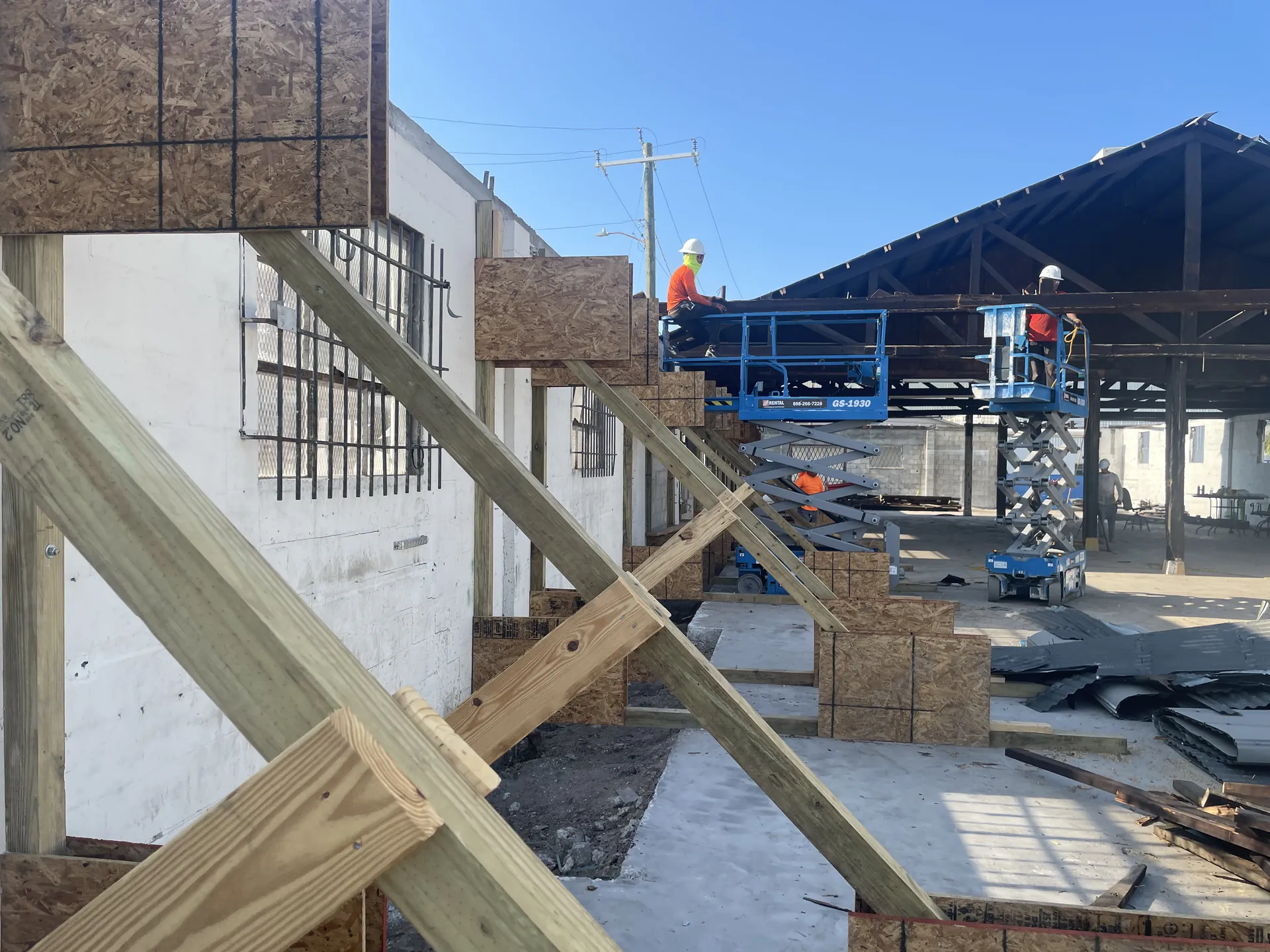
Restoring integrity without losing character.
S-500.4
- Structural repair documents for deteriorated historic elements. When structural elements in a historic building - timber framing, masonry walls, foundation systems - have deteriorated to the point of requiring repair or partial replacement, we produce the structural repair drawings and specifications needed for permitting and construction. We specify repair approaches consistent with the Secretary of the Interior's Standards, favoring repair of existing materials over wholesale replacement where structurally viable.
- Foundation assessment and repair design for historic structures. Foundation conditions in historic buildings - shallow footings, rubble stone foundations, unreinforced concrete, and systems built before modern soil investigation was standard practice - require evaluation methods and repair design specific to historic construction. We assess existing foundation conditions and design repairs that address structural performance without requiring the kind of invasive demolition that would compromise the historic structure above.
- New additions to historic buildings. Additions to historic structures - vertical additions, rear additions, connecting structures - must be designed so that, as the Secretary of the Interior's Standards require, they are structurally and architecturally distinguishable from the original while not compromising its character. We design addition structural systems that connect to the existing building without overloading the historic structure and that can be removed in the future without impairing the historic building's integrity.
S-500.5
Tampa's Historic Districts
Tampa has four locally designated historic districts and 64 local historic landmarks, each governed by specific review processes that affect what structural work can be done and how it must be documented.
- Ybor City
- Tampa's most architecturally distinct historic district - a National Historic Landmark District - is governed by the Barrio Latino Commission (BLC), which reviews all exterior alterations in the district. The BLC's Ybor City Design Guidelines shape what structural interventions are permissible at the building exterior. Ybor City's building stock is predominantly unreinforced brick masonry commercial construction from the late 19th and early 20th centuries, presenting specific lateral wind performance challenges under Florida's current code. Structural work in Ybor City requires coordination between Florida Building Code compliance and BLC review - which means the structural engineer and the architect need to be working from the same page on what is and isn't acceptable to both bodies.
- Hyde Park, Seminole Heights, Tampa Heights, and West Tampa. These districts are governed by the Architectural Review Commission (ARC), with distinct design guidelines for each district. Hyde Park's historic residential stock is predominantly wood-frame construction from the early 20th century; Tampa Heights and West Tampa contain a mix of wood-frame residential and masonry institutional buildings; Seminole Heights has a dense inventory of Craftsman and Mission Revival bungalows that often require structural assessment before rehabilitation. All permit applications for structural work affecting exterior character-defining features in these districts require ARC review.
- Properties outside designated districts
- Historic buildings throughout Florida that are not within a formally designated local historic district may still qualify for Florida Building Code Chapter 12 alternative compliance provisions if they meet the code's definition of a historic structure - including properties listed on or eligible for the National Register of Historic Places and properties individually designated under local ordinance. Understanding whether a property qualifies and how to apply the alternative compliance provisions requires specific knowledge of both the FBC and the preservation regulatory framework.
Existing fabric
The old structure is the first drawing.
S-500.7
Florida Building Code Chapter 12 and the Secretary of the Interior's Standards
Two regulatory frameworks govern structural work on historic properties in Florida. Understanding how they interact - and how to work within both simultaneously - is where the engineering and preservation expertise come together.
Florida Building Code Chapter 12 provides alternative compliance provisions for qualified historic buildings, allowing the building official to accept alternative materials and methods that achieve equivalency with the technical code requirements without requiring full compliance with provisions that would be damaging to the building's historic character. This is not an exemption from structural requirements - it is a pathway to achieving structural performance through alternative means, documented by a Florida-registered PE. The work of a structural engineer on a historic building is to design those alternative means and demonstrate their equivalency.
The Secretary of the Interior's Standards for Rehabilitation govern the treatment of qualifying historic properties and establish the principle that structural work should preserve and repair existing historic materials rather than replacing them, that new structural additions or alterations should be reversible where possible, and that structural interventions should be distinguishable from the original on close inspection without being visually disruptive. These standards are not Florida Building Code requirements - but they are the framework that governs whether a rehabilitation qualifies for Federal Historic Tax Credits and whether the applicable preservation review body will approve the work.
The structural engineer working on a historic building in Florida needs to understand both frameworks simultaneously - designing structural solutions that satisfy the performance requirements the building code is designed to achieve, using methods that the Secretary of the Interior's Standards permit and that the ARC, BLC, or State Historic Preservation Officer will approve.
S-500.10
What We Look for in Historic Buildings That Others Miss
Load path gaps that aren't visible without investigation. Historic buildings often have structural systems that look continuous from the outside but have gaps in the load path that become apparent only when you understand how the system is supposed to work and look for evidence that it does. Roof-to-wall connections in unreinforced masonry buildings are a common gap - the roof structure sits on the masonry walls without positive mechanical connection, which is a significant vulnerability under Florida wind loads regardless of how sound the masonry itself is.
Deterioration that is concealed by finish materials. Plaster ceilings, wood paneling, and historic finish systems can conceal significant structural deterioration in the framing or masonry behind them. Timber members with internal rot that appears sound on the surface, masonry mortar that has deteriorated to dust behind intact face brick, and corroded steel lintels above window openings that are supporting significant masonry above - these are the findings that change the scope and budget of a historic rehabilitation project and that surface during construction if the structural assessment didn't find them first.
The difference between what is historically significant and what is structurally significant. Not every original element in a historic building is a character-defining feature under the Secretary of the Interior's Standards - and not every element that preservation review boards care about is structural. A structural engineer working on historic buildings needs to understand both dimensions: what the structure actually requires and what the preservation framework actually protects. Conflating the two leads to either unnecessary preservation scope or unnecessary structural conflict with the review body.
Repair
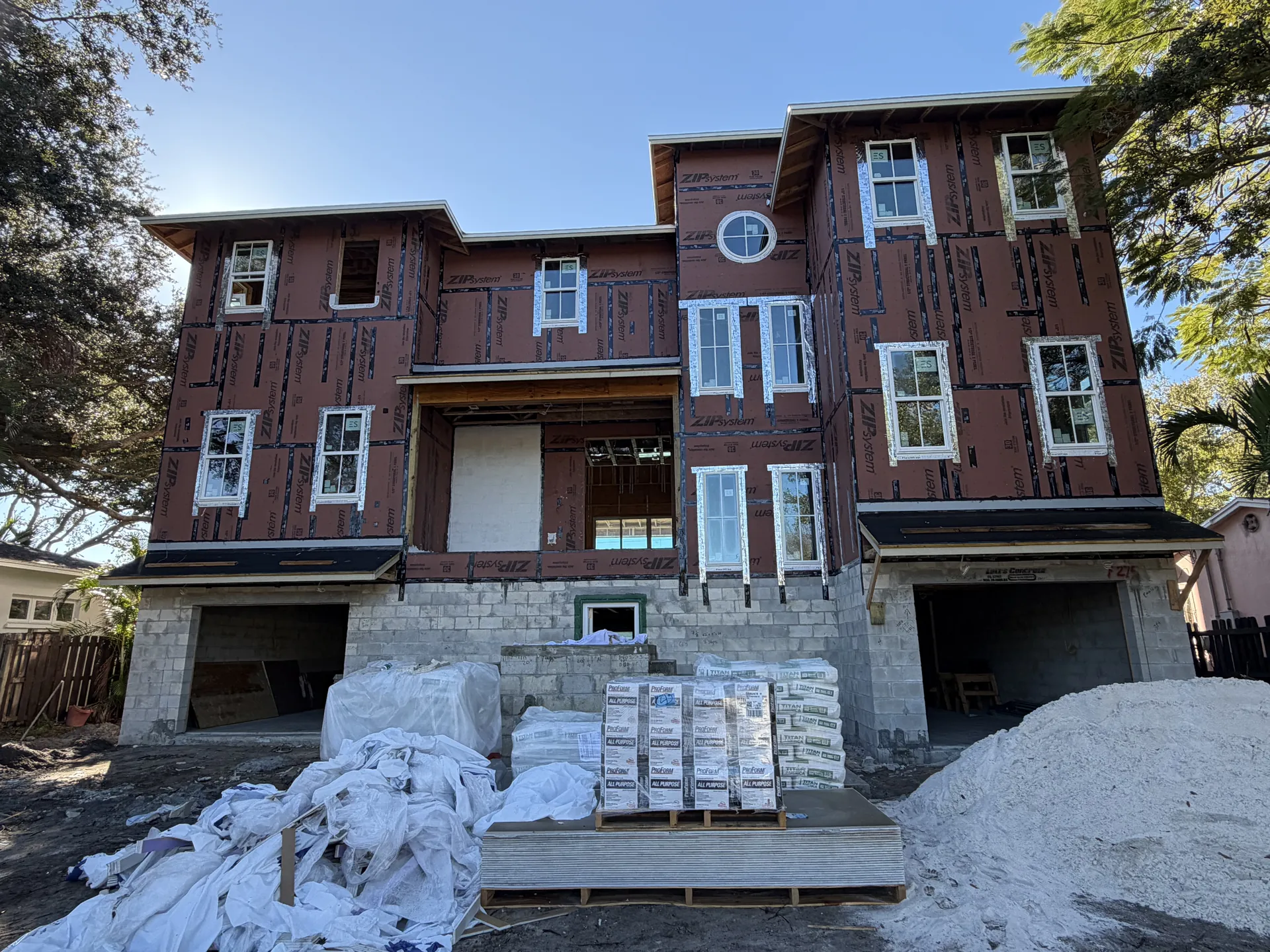
Repair what carries load. Keep the rest.
Questions and answers.
S-500.10 / FAQ-
No. Chapter 12 provides alternative compliance pathways - it allows a licensed PE to demonstrate that alternative materials or methods achieve equivalency with the structural performance the code requires, when strict application of the code would be damaging to the building's historic character. The building still needs to meet structural performance standards; the path to compliance is different. The structural engineer's role is to design and document the alternative means of compliance.
-
It depends. The Standards are required for projects seeking Federal Historic Tax Credits and for projects in federally administered historic programs. They are also adopted by reference or used as guidance by many Florida local preservation ordinances and review commissions. Even when they are not formally required, they represent the accepted framework for preservation practice, and local review bodies generally apply them. If your project involves a designated historic property, a preservation specialist and your structural engineer should be aligned on which standards govern.
-
Yes - and we prefer it. Historic preservation projects work best when the structural engineer and preservation architect are coordinated from early design through permitting. We work as a structural engineering resource alongside architects who specialize in historic preservation, providing the structural analysis and documentation needed to support their design and navigate both the building department and the applicable preservation commission.
-
Ybor City's commercial buildings are predominantly unreinforced brick masonry with wood or concrete floor and roof framing. Historic residential buildings in Hyde Park, Seminole Heights, and Tampa Heights are primarily wood-frame construction using old-growth longleaf pine. Some institutional buildings in these districts incorporate concrete or steel structural elements added during 20th-century renovations. Each building type presents distinct structural engineering considerations.
-
Federal Historic Tax Credits - which provide a 20% credit on qualified rehabilitation expenditures for income-producing historic properties - require that the rehabilitation be a Certified Rehabilitation consistent with the Secretary of the Interior's Standards. Structural work that requires removing or altering character-defining historic materials may affect certification. Engaging a structural engineer and preservation consultant early in the project - before design decisions are locked in - is the best way to avoid rehabilitation scope that conflicts with certification requirements.
Start with a conversation.
S-500.11 / next stepSpeak with a licensed PE
Tell us the project type, size and timeline and you get an engineering answer, not a sales call.
Call (813) 536-8002Send us your plans
Share plans, sketches or photos and we review them before we call. Scope, size and timeline are what let us give you a real number.
Request a consultationTell us about the project.
S-500.12 / consult requestThe more you can tell us about scope, size and timeline, the more useful our first call is. A licensed PE reads every one of these.