
Commercial Structural Engineering in Tampa, FL
Design That Moves Projects Forward
S-710.1
The Structural Delays Most Commercial Projects Face
If you've worked with a structural engineer before, at least one of these has happened:
- Drawings delivered late, with no warning until the deadline passed
- Field conditions changed, and getting a revised detail took ten days
- RFIs came back vague, citing the spec but not actually answering the question
S-710.2
Commercial Structural Engineering Services We Provide
We provide full structural engineering services for commercial projects from schematic design through construction administration:
- Structural system selection and design - steel frame, reinforced concrete, masonry, and wood
- Foundation design - slab-on-grade, spread footings, pile foundations, and deep foundation systems
- Lateral system design - shear walls, moment frames, and braced frames for wind and seismic loads
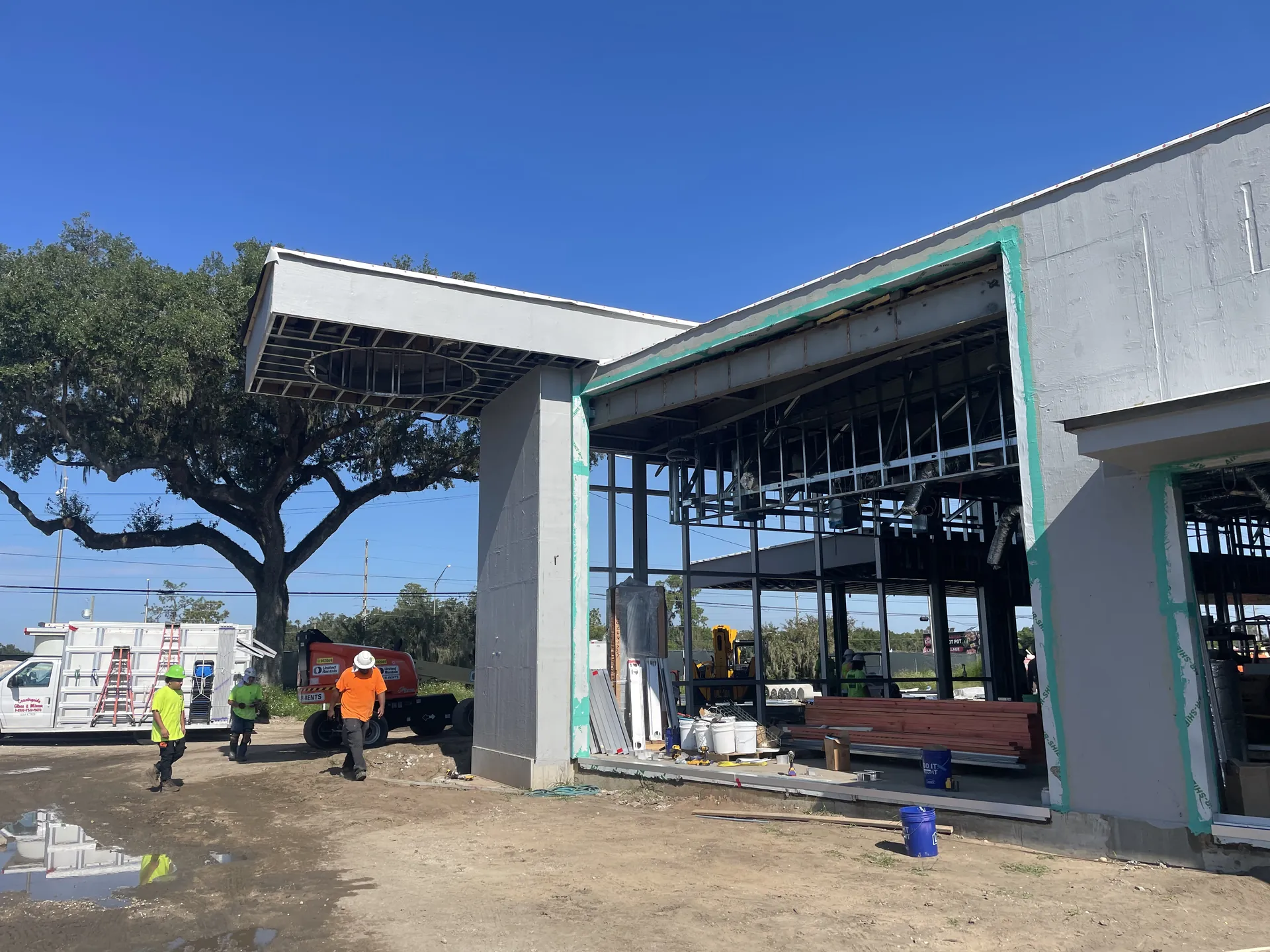
Commercial
Steel, concrete and the frame between.
S-710.4
Every Structural System. Every Commercial Building Type.
We work across the full range of commercial structural systems and building types - not a narrow niche:
Structural systems: Structural steel frame, cast-in-place and post-tensioned concrete, concrete masonry, light-gauge steel framing, wood-framed commercial construction, and hybrid systems.
Building types: Office buildings, mixed-use and multi-family, retail and restaurant, medical office and outpatient facilities, hospitality, institutional and government, warehouse and light industrial, and parking structures.
Project scales: Tenant build-outs and additions through mid-rise and high-rise commercial construction. We size our engagement to your project - not the other way around.
If your building type isn't listed, ask. If we've done it, we'll tell you. If we haven't, we'll tell you that too.
S-710.5
How We Coordinate With Your Architect and GC From Schematic Design to Permit
Structural engineering problems in commercial construction are almost always coordination problems - not analysis problems. The analysis is straightforward. Getting the structural system to integrate cleanly with the architectural program, the MEP routing, and the construction sequence is where most structural engineers underperform.
- Early engagement
- We join the project at schematic design when structural decisions still have room to move - not at design development when the floor plan is locked and the structural system has to fit around it. Early structural input protects the architect's design intent and prevents the expensive surprises that surface when structural and architecture are reconciled too late.
- BIM coordination
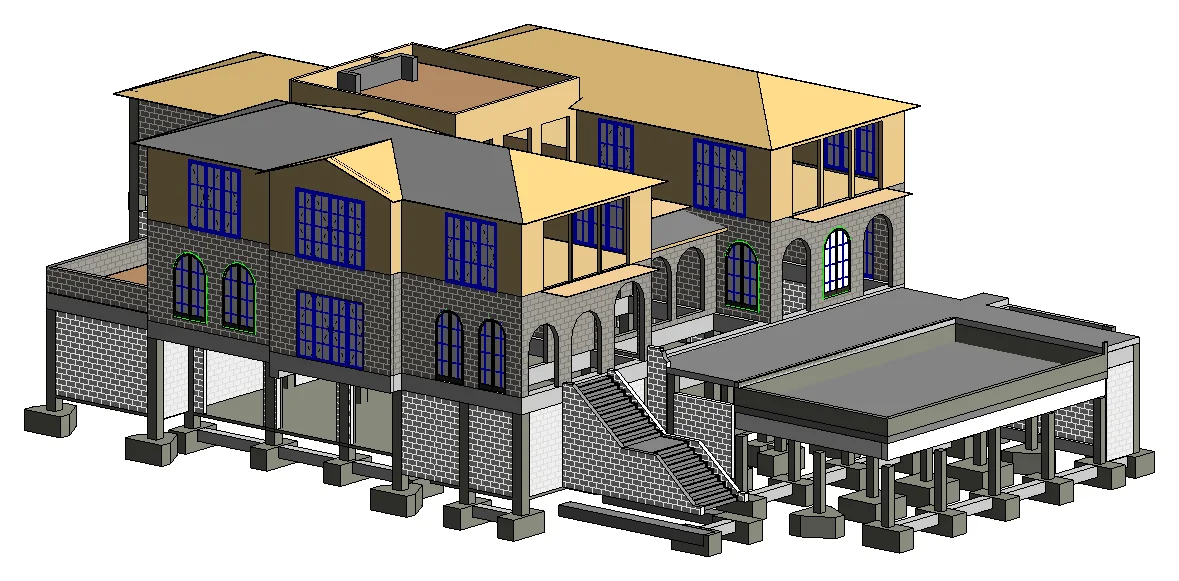
- Our BIM Director produces structurally accurate Revit models coordinated with your architectural and MEP models. Clashes are resolved in the model before they become RFIs in the field.
- Responsive communication
- We set response commitments at project kickoff and we keep them. RFIs get real answers - with reference to the specific detail, not a redirection to the spec section.
- Construction administration that actually supports construction. We review shop drawings with the attention they deserve and we respond to field conditions with drawings that can be built - not language that protects the engineer at the cost of the contractor's schedule.
Coordination
Coordination is schedule, not paperwork.
S-710.8
Why Tampa Developers and Commercial Architects Work With Duran
Tampa's commercial construction market is active - mixed-use developments, healthcare expansion, multifamily, and institutional projects are all in motion across the metro. The structural engineering capacity serving that market is concentrated in a few larger firms, most of which operate with the same volume model: high project load, junior staff on day-to-day execution, senior PEs available for kickoff meetings and permit issues.
Duran is built differently. Four engineers. One BIM Director. Intentionally sized to deliver the level of service our clients actually need on every project - not just the ones we prioritize.
For architects, that means a structural partner who coordinates early, stays engaged through CDs, and doesn't create friction during design review. For GCs, it means fewer RFIs, clearer details, and a structural engineer who understands what the drawings need to accomplish in the field. For developers, it means a team that understands project economics and thinks about structural decisions in terms of constructability and budget - not just code compliance.
Multi-state PE licensure in Florida, North Carolina, Georgia, and Alabama means regional developers and national firms building across the Southeast have one consistent structural partner.
Commercial
Long spans, heavy floors, working crews.
Questions and answers.
S-710.9 / FAQ-
At schematic design - or earlier if the structural system is going to drive the program. The later structural engineering enters the design process, the more it costs when the system needs to change. Early engagement costs nothing extra and prevents the coordination problems that generate change orders.
-
We hold PE licensure in Florida, North Carolina, Georgia, and Alabama. Most structural engineering work is performed remotely - analysis, modeling, drawing production, and coordination all happen digitally. Site visits are scoped into projects where field observation is warranted and built into the project schedule.
-
Steel, concrete, masonry, and wood - and hybrid combinations of all four. We do not have a preferred system that we try to apply to every project. We recommend the system that is right for your building type, site conditions, budget, and construction timeline.
-
We respond within the timeframe established at project kickoff. RFI responses reference specific details, draw numbers, and notes - not boilerplate language. If a field condition requires a revised detail, we produce it fast enough to keep your contractor moving.
-
Yes. We are accustomed to joining project teams already in progress - coordinating with an architect of record, MEP engineer, civil engineer, and owner's representative simultaneously. We integrate into your existing workflow and communication structure.
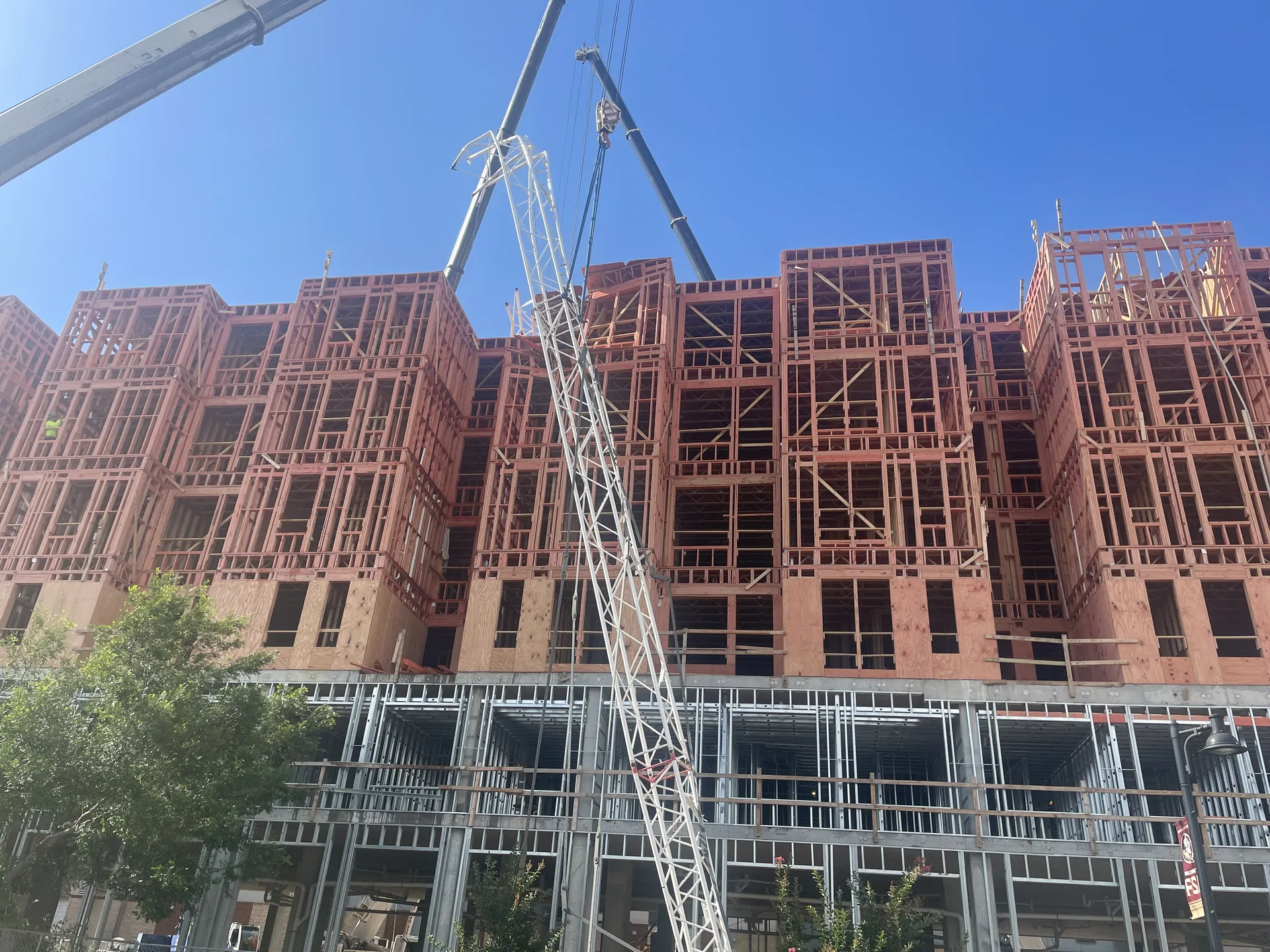
Podium
Wood levels carried on a steel-framed podium.
Related work.
S-710.11 / relatedProjects rarely sit inside one service. These are the ones that most often come up alongside this work.
Start with a conversation.
S-710.12 / next stepSpeak with a licensed PE
Tell us the project type, size and timeline and you get an engineering answer, not a sales call.
Call (813) 536-8002Send us your plans
Share plans, sketches or photos and we review them before we call. Scope, size and timeline are what let us give you a real number.
Request a consultationTell us about the project.
S-710.13 / consult requestThe more you can tell us about scope, size and timeline, the more useful our first call is. A licensed PE reads every one of these.